
Why does the form matter?
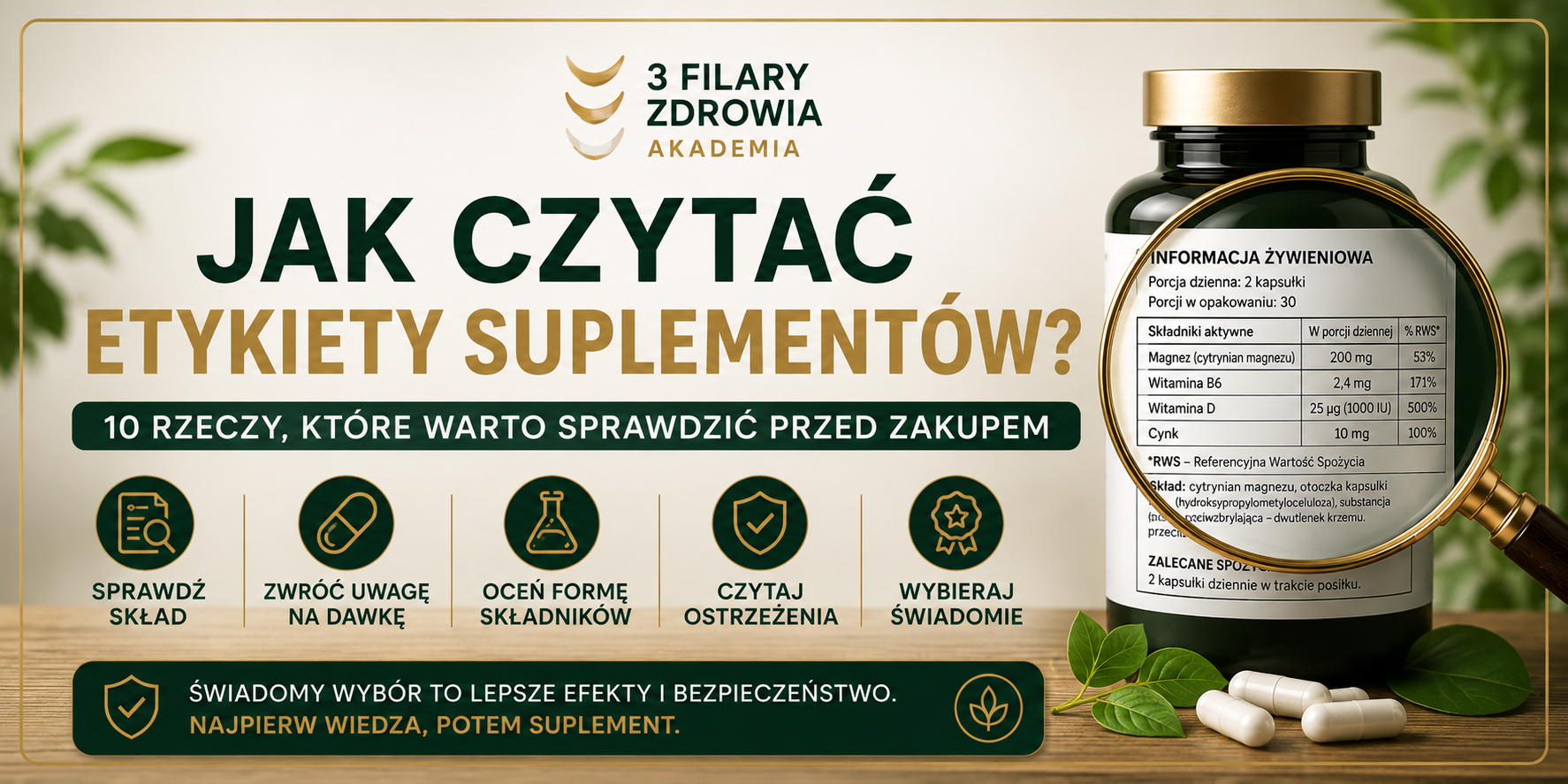
When you see "magnesium" on a label, that's only half the information. The chemical form is key — it determines absorption and effects:
- Magnesium oxide — cheapest, ~4% absorption. Mainly acts as a laxative.
- Magnesium citrate — ~16–25% absorption, popular, good price-to-quality ratio.
- Magnesium bisglycinate — amino acid chelate, up to 40% absorption, gentle on the gut, best for sensitive individuals.
- Magnesium L-threonate — the only form that crosses the blood-brain barrier, recommended for cognitive function.
What does "% Daily Value" mean?
RDA (Recommended Dietary Allowance) is the minimum dose to prevent deficiency in a healthy population — not the optimal dose. For vitamin D3, the RDA is 600 IU, but studies suggest that maintaining optimal 25(OH)D blood levels often requires 2000–4000 IU daily.
Treat RDA as a floor, not a ceiling.
Bioactivity vs. concentration
A supplement might list "500 mg ashwagandha extract" without specifying standardization. Check that the extract is standardized for withanolides (target: ≥5%) — only then do you know what you're actually delivering to your body.
Quality certifications
- GMP (Good Manufacturing Practice) — pharmaceutical-grade production standards
- NSF / Informed Sport — testing for contaminants and doping substances
- Third-party tested — independent lab confirms the composition
Quick checklist before buying
- ✅ What chemical form of the active ingredient?
- ✅ What standardization of the extract?
- ✅ Is the dose therapeutically effective?
- ✅ Does the manufacturer have GMP or third-party testing?
- ✅ How many fillers and artificial colorings are listed?
Zespół 3 Filary Zdrowia